Saturday, February 9, 2013

Review: "To the Heart of the Storm"

Strangely enough, that title has nothing to do with the foot of snow that fell last night. "To the Heart of the Storm" is a graphic novel by Will Eisner, an autobiographical account of growing up Jewish in New York City. It's the only book I've ever successfully gotten the BF to read.

I don't mean to imply that he doesn't read, it's just that he tends to read non-fiction, mostly for his own edification, writing supplemental notes in the margins that bug the hell out of me when I borrow his books. He doesn't read like I do, constantly, compulsively, sometimes painfully, to the exclusion of all other activities. For a while, I had a half-hearted campaign to turn him into me. I gave him books to read, fantasy and horror and superhero, thinking that he surely must be bored with those film and architecture books, and just needed the right piece of fiction to awaken the true book addict that lurks inside everyone. As you might expect, the whole thing went about as well as his attempts to get me interested in classic episodes of "The Twilight Zone." You just can't force your passions on your partner.
You wait to force them on your children.
He's never going to come to ComicCon with me, and I'm never going to get that excited about spending the afternoon in a museum. (It's cold, you can't touch anything without him scolding you, and there's no place to sit down unless you're cheek by jowl with sticky Midwesterners. I don't understand the appeal.) So imagine my surprise when I handed him "To the Heart of the Storm" and he sat down and read the whole thing in an afternoon. I think I've cracked the code: the BF likes Will Eisner.

A note about Eisner: he was a cartoonist and writer, and one of the inventors of the American comic book, creating titles like Sheena, Queen of the Jungle and The Spirit, the latter of which has never been out of print. In World War II, he pioneered the genre of "instructional comic," producing booklets for the Army during the war, and for private companies and schools in peacetime. The comic book industry awards are called the Eisners (and Will Eisner actually won several Eisners in his lifetime, which pleases me greatly for reasons difficult to articulate).

This was actually the first work by Eisner that I've read. I'm a little embarrassed to admit that as a comic book fan, because it's like being a film buff without ever having watched "The Godfather." As far as introductions go, "To the Heart of the Storm" is one of the best graphic novels I've ever read, and completely explains why Eisner gets to have the industry awards named after him. It's a deeply personal work that showcases his extraordinary talent for sequential art and writing. It's also a deeply political work about Eisner's experiences with racism and antisemitism as a child, told from the point of view of Eisner as young man on his way to fight in a war that's been brewing his entire life.

What I find fascinating about this book is that Eisner wrote it in 1991, when he was in his seventies.  He'd already lived a lifetime between the events of the book and the time of its creation, and yet "To the Heart of the Storm" feels so immediate and raw, like it all happened to him yesterday. I was struck in particular to the detail he put into his mothers and aunts shoes in flashbacks to their childhoods on the Lower East Side in the late 1890s and early 1900s. And there is such an overall feeling of sadness and anger over the whole work, a helpless and confused kind of anger that only children, with their limited understanding of the world, are capable of feeling. This enormously successful man, having proved all detractors and tormentors wrong decades before, still felt the pain of being called "kike"; of pretending to be gentile so he could go to parties in middle school; of hearing his so-called friends supporting Hitler's actions against the Jews. It never stopped hurting.

I would recommend this book to--well, anyone. It's suitable for children as young as ten or twelve, no swearing or nudity. Even people who don't normally read comic books will appreciate the work of this master of the form. And if being racist knocks you down a full letter grade in my system, creating a thoughtful and biting anti-racist and pro-humanity piece must get you bumped to the top in Big Island Rachel's world.

Final Grade: A+. It gets the + because the BF liked it, too.

Sunday, February 3, 2013

Review: "This Book Is Full Of Spiders, Seriously Dude, Don't Touch It"

I called it!

Last week, I wrote about the joys of other people's bookshelves and said I would find my next book to read on R's shelves. And sure enough, this week we're looking at David Wong's "This Book Is Full Of Spiders, Seriously Dude, Don't Touch It" (2012).

David Wong is the pseudonym of Jason Pargin, a senior editor and columnist for the  humor website Cracked.com. Go there now if you want to never get anything done, ever again. I have a feeling that Cracked is responsible for more lost productivity than Lolcats and pornography combined, at least in my own experience. It has a seemingly endless archive of funny columns and lists on any number of topics, updated every day,  and it's affect is best described by this xkcd comic:

This book is actually a sequel to Wong's "John Dies At The End" (which was made into a movie this year). Both are set in a Midwestern town only identified as Undisclosed, an area known to the Iroquois as Seriously, Fuck That Place. It's poor, boring, and quite possibly the portal to Hell, or at least to another dimension of shadow men and monsters. David Wong, both narrator and author, and his best friend John are life-long inhabitants of Undisclosed and self-appointed monster-hunters and protectors of the town. They are also complete drunken fuck-ups. This is a difficult enough situation when they're just trying to save their own skins in "John Dies At The End, " but when they're called on to save their entire town and possible the world from evil brain parasites in "This Book Is Full Of Spiders," they have to somehow rise above their own jackassery  and become heroes after a lifetime of being losers.

It's rare that a book can both make me laugh out loud and have to sleep with the light on. "Spiders" is hilarious, especially in the first third (it gets less funny and more action-oriented toward the end), but it's also terrifying. The humor is in the words, the horror in the situations, and it works surprisingly well. The genre of horror humor is pretty sparse to begin with, but books like this one show that the two don't have to be mutually exclusive. Both humor and fear draw their impact from surprise. We laugh more at jokes when we don't know the punchline ahead of time; we don't fear the monster we see as much as the monster we don't see. Wong the author understands the similarities between the two states and takes us on a wild ride to the end of the world and back again.

At the risk of big ole SPOILERS:

"Spiders" is a book about zombies. The brain parasites that begin multiplying through the town can reanimate their dead hosts, exist only to expand their numbers, and can only be stopped by removing the head of the host or destroying the brain. The twist on these zombies is that the parasites change the physical make-up of their hosts, much like the alien in John Carpenter's "The Thing." The world reacts to the news of the zombie apocalypse much like you'd expect them too: by setting up anti-zombie militias and Tweeting.

I have to confess that as much as I enjoyed "Spiders," which is a more technically accomplished work than its predecessor, on the whole I prefer "John Dies At The End." I'm just not that into zombies, and we've reached such a pop-culture saturation point with them that I've lost whatever small interest I may have had with them (and it was a very small interest, because as we've established, I'm a massive pansy). 

As far as zombie apocalypses go, "Spiders" is fairly standard, from the shady government goons who may hold the key to the cure, right up to the stirring action movie climax. And if you like that sort of thing, you'll love this book. Wong is clearly versed in the tropes of the zombie genre (zomb-re?) and his love and appreciation for his source material shines through in this well-crafted addition to the cannon. It's done well. It's just been done.

Final Grade: B. Recommended for zombie fans, horror fans, readers of Cracked, and people who like dick-jokes.

Saturday, January 26, 2013

Interlude: Other People's Bookshelves

I don't want to make my shelves jealous, but I love browsing through other people's book collections, especially if they're readers like me. I can spot a kindred spirit by their books: by the variety of theme and type, by the way the books are organized, and by the person's willingness to talk about their books the same way others talk about their pets or their kitchen.
Get ready for an onslaught of library porn. I found a tumblr on the subject.
 There's an indefinable something that distinguishes a book lover's from a layperson's collection. I can tell at a glance who has a true library and who just has a place where the books go. The presence of so-called genre writing is a big clue. If there's a lot of sci-fi and fantasy hanging around, that person is probably a reader; ditto for comic books and graphic novels, especially if they're prominently displayed where visitors can see them. There's still a big of shame and stigma attached to enjoying genre writing, so a willingness to display such works and invite comment says the reader ain't give a damn what other people think of her interests.
Why yes, I do own every book every written about Rubicks cubes.
Variations on theme are another clue. Readers who are really in to reading tend to go for depth and completism. The BF has "The Sun Also Rises," "This Side of Paradise," and "The Great Gatsby"; he also has many books on the subject of the Great Depression and the art and design aesthetics of the 1920s and 30s. R's bookshelf has "The Absolutely True Diary of a Part-Time Indian" and "The Adventures of Huckleberry Finn," so it's not surprising she would also have a non-fiction book called "Teaching Race in the Classroom."

I'm a bit hard-pressed to explain my own thematic elements. Maybe it's like tickling: you can't do it to yourself. I may have to get someone in here to look at my shelves and explain them to me.

And finally, a true reader and book-lover will always have something to say on the subject of organization. My friends J and L organize alphabetically by authors' last names, like a proper library; the BF shelves his books (and DVDs) chronologically by the year they were published/produced; right now I'm shelving by height, though I may organize them by color in the near future, just for a change. It's never haphazard. There's always a reason the books are set up like that, and the book-lover desperately wants you to comment on it so she can explain her system.
It all began when I saw "Beauty and the Beast" as a child...
 This post was originally going to be a review of Tim O'Brien's "The Things They Carried," which I borrowed from R's library. But while I enjoyed the book and could probably mash my brains into saying something witty and profound about the text, what I'm actually thinking about this morning is the fact that I'm going to R's apartment later today and will be able to browse through her books again. That's what I'm really excited about: other people's bookshelves. It got me to thinking about the people I've known and the book collections I've had--no other way to put it--relationships with, and decided to say something witty and profound about that instead.

I may just be a hawa'e maoli (collector urchin) when it comes to books and want to pick up every book I see and glom it on to my body to conceal me from predators.
Turtles and sharks will be baffled by my impenetrable armor of cornflakes
But there's more to it than that. I like other people's bookshelves because while reading tastes are a very personal thing, a bookshelf is rather public in nature. A bookshelf is an open display of a person's inner world and imagination, what they like, what they think about, what they desire. It's a strange mixture of the public and the private that endlessly fascinates me for its potential to both reveal and conceal the truth of a person's being.
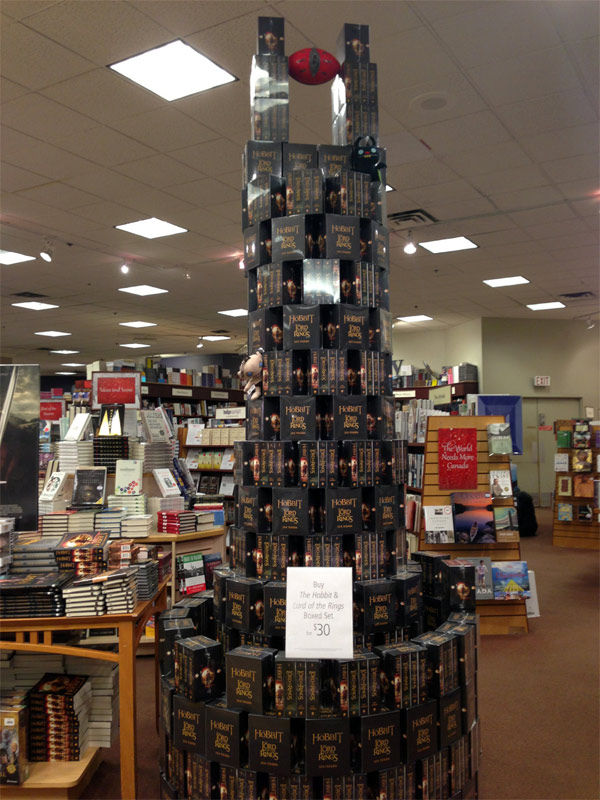
Sauron knows what you think about at night. For shame.
Now why do I get the feeling other people are going to stop showing me their bookshelves?

Saturday, January 19, 2013

Review: "Geisha: A Life"

You may have read over at my other blog that I'm swamped with work stuff right now, so it's an interesting coincidence that this book popped up on my radar. "Geisha: A Life" (2002) is a memoir by Mineko Iwasaki that describes her training and career as the most successful modern geisha in Japan. At one point in her life, she worked for five years straight without a single day off, and lately, I've been feeling her pain.

Just to be clear, I'm not reviewing "Memoirs of a Geisha" by Arthur Golden. In fact, Iwasaki sued Golden over his book, because he listed her as one of his primary sources after he promised to protect her identity. She wrote her book as a kind of anti-Golden account, even stating in a few places that she wants to clear up the misconceptions that outsiders have about geisha and the world of the karyukai ("flower and willow world," basically the districts in Japan that house geisha and cater to their clients).

The book itself is a quick read. I've actually read it twice since my busy time started. I found it compelling for the world it described, though the writing itself is a bit dull. As far as memoirs go, it commits the fatal sin of telling-not-showing, using the "This happened to me, and then this happened to me, and then I met this person and we did this together" method. Shirley Jackson she ain't. But Iwasaki is a fascinating person who has led such an interesting life that the dull writing almost doesn't matter. She's giving away intimate details of one of the most secret and misunderstood societies in the world. How can you look away?

I'm biased in favor of this book to begin with because modern Hawaii culture is greatly influenced by our Japanese population, and I recognized a lot of the festivals and art forms described in the book. Furthermore, I played taiko drums for many years under both Japanese and American teachers, so I recognized many of the techniques and attitudes Iwasaki's teachers used on her during her training. Of course I never got within a hundred miles of the kind of talent and mastery that a geisha has over her chosen art form, but it was all familiar enough to make me feel a bit nostalgic.

Final Grade: C. Recommended for those interested in Japanese culture, geisha, and sticking it to the imperialist white man who tramples the dignity of your profession.

Sunday, January 13, 2013

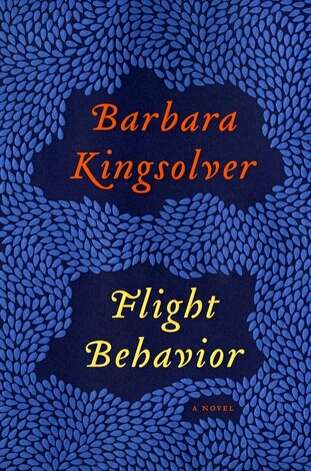
Review: "Flight Behavior" by Barbara Kingsolver

I felt so confident that I would love Barbara Kingsolver's latest novel, "Flight Behavior" (2012) that I actually bought it. New. In hardcover. I had an option at the time, because I had a gift card to the fabulous Greenlight Bookstore, to purchase two of her earlier works in paperback, but went for the shiny new book instead, because I've followed her career and she tops herself with every subsequent work she publishes. Hot damn, I thought, new Kingsolver and gift card to afford the hardback. I am one lucky Big Island Rachel.
Luxury goods!
But no. Just--no.

"Flight Behavior" wasn't as big a disappointment to me as reading Monique Truong's mediocre "Bitter in the Mouth" after her superlative "The Book of Salt." That let-down was a literary tragedy for me because I just loved "The Book of Salt" so very much. I will get around to reviewing it someday, I promise.

This was merely a disappointment, considering that it came close on the heels of "The Lacuna," which literally made me clasp my chest and cry out in pain at one point. And I recommend Kingsolver's "The Poisonwood Bible" to anyone who talks with me about books for more than two minutes. (I really regret not buying those two books in paperback at Greenlight when I had the chance.)

What both of these books have in common is that they deal with sweeping historical events from the perspective of the rather insignificant individuals caught in the middle of them. The overall effect humanizes these big, almost unfathomable occurrences that shape countries and cultures. There's something so intimate and personal about her stories, something immediate, that both transcends and illuminates time and place in Kingsolver's novels. You never feel like you're reading "historical fiction."

"Flight Behavior" attempts to do the same thing, but instead of discussing Communism in the Americas ("The Lacuna") or the de-colonization of Africa ("The Poisonwood Bible"), this book is about climate change. The every-man that walks us through the issues of the day is Dellarobia, a young mother in the Appalachias who discovers a colony of monarch butterflies on her in-laws' property. The monarchs should be at their winter home in Mexico, but have instead come here, because of climate change. A media circus swirls around the butterflies appearance, a handsome scientist moves into Dellarobia's barn to study the phenom, and she realizes that she has some tough choices to make about the unhappy life she's built for herself.

This is not a bad book, by any means. I read the whole thing, after all. I really like Dellarobia and feel for her plight. She married the boy who got her pregnant in high school, and while he's a good man, she's just too quick and smart for the kind of the life he can offer her. She loves her kids, but resents the hell out of the limitations of stay-at-home mothering. And she's poor. So poor, gang.

Poverty in modern America is a big theme in this book, and I sort of wish it had been the sole focus, because Kingsolver describes it so well. I loved the scene where Dellarobia and her husband have a fight in the dollar store as they attempt to put together a "real Christmas" for their children on a $50 budget. The book lingers over details like their truck on its third engine, the lack of protein in their diets, the shoddy stitching on their cheap clothes, and the free lunch forms Dellarobia gives to her son to take to school.

Much like Edith Wharton does in "Ethan Frome," Kingsolver illuminates the dark reality of the American dream, where all pathways to salvation and happiness require an amount of money that is simply impossible for the protagonists to acquire without an act of evil, wanton destruction. A lot of the tension in "Flight Behavior" comes from Dellarobia's father-in-law, who wants to sell the timber rights of the butterflies' mountain to a logging company to pay off his debts so he doesn't lose his land outright. If the mountain is logged, it will effectively mean the extinction of the species, because so much of the North American population is wintering on the mountain. And worse, it will only pay the debt for a month or so, leaving the family right back where it started. It's a short term act that will have permanent repercussions.

Anyone else hear the whistling of the symbolism sledgehammer as it swings down toward your head?

Here's where the book falls apart for me. It's about climate change, and when I say that, I don't mean that climate change is the larger issue in which these characters' stories play out; I mean it's about climate change. There's long passages where scientists explain how climate change works, what greenhouse gases are, and why every argument that states climate change isn't happening is wrong. There's protesters and activists camping out on the butterflies' mountain. There's media personalities describing how they'll put the spin on the story to make it seem like climate change is a matter of controversy in the scientific community. And at some point, all of this tips the balance, and the book stops transcending its theme. It becomes polemic, its agenda too transparent, and I feel like I'm being preached at.

It's such a shame, because I feel like certain aspects of this book really do keep that balance. The preacher of the community makes some great arguments about God wanting humans to be responsible stewards of the planet, showing that the issue of climate change isn't as clear-cut as rational, science-minded people on one side and stupid religious people on the other. The scenes about poverty show that planet-destroying habits don't come from a place of selfishness or evil, but from need and lack of affordable alternative options. Dellarobia's whole situation is symbolic of climate change: she just sort of went along with everything and made the best decisions she could, until she looked up one day and realized that she was fucked.

But all of that deftness and subtlety is thrown out the window whenever people sit around a table and talk about climate change. It feels so clumsy and forced, like that part in George Orwell's "1984" that is just a passage from another book analyzing how totalitarianism works. Did he think his readers wouldn't understand it without the scholarly essay? We have just spend a hundred-odd pages with characters living in that society, I think we know what's going on.

I don't love all of Kingsolver's books. I didn't even finish "Animal Dreams," one of her earlier works. But the talent and skill she's accumulated over the course of her career made me expect a little more from "Flight Behavior" than was actually delivered. It's an okay book. It's just not great.

Final grade: C+. Recommended for those who like family dramas, stories about the American frontier, environmental issues, and butterflies. 

Sunday, January 6, 2013

Review: "The Haunting of Hill House" by Shirley Jackson

Shirley Jackson is one of those secret-famous authors. Say her name and you're likely to get back a lot of blank stares, but say the title of her work or an adaptation of her work and watch their eyes light up. "That's who wrote it? What was her name again?"

Most schoolchildren in America are familiar with her short story, "The Lottery," about a small town that ritualistically murders an individual every year to ensure good harvest and good fortune. It's such a classic that you might know it by heart without remembering the first time you read it or saw it referenced in other TV shows and movies. "The Simpsons" referenced it in their golden years ("Dog of Death," season 3, episode 19), and even "South Park" took a stab at it, no pun intended because the townsfolk use rocks ("Britney's New Look," season 12, episode 2).

The subject of today's post, Jackson's 1959 novella "The Haunting of Hill House," has twice been adapted as a movie called "The Haunting." The first movie from 1963 is supposed to be pretty good, a classic of horror cinema, which is why I haven't watched it. I'm a pansy. I saw the 1999 remake on TV one night, but only because it's too shitty to be scary, even for me. I don't recommend it, though I do recommend this Nostalgia Critic video review that compares the two versions.

As I mentioned, I'm a pansy when it comes to horror. I actually read "The Haunting of Hill House" in the day time because I was too afraid to read it at night. Was my fear justified? Yes, but maybe not in the way Jackson intended. Horror and ghost stories depend a great deal on atmosphere, and Jackson certainly knows how to create that brooding sense of danger and fear. But for me, the book was a bit defeated by her own premise, which is that the characters are gathering in the big scary haunted house specifically to study and observe the phenom of a haunting. Some of my fear immediately goes out the window when the characters know that they're being haunted and talk openly about their impressions and observations of the ghosts' activity.

I think Jackson was trying to show how the power of ghosts and fear can hold up even under scientific scrutiny, and while it's an original premise that raises a lot of interesting questions about the concepts and conceits of the ghost story genre, it doesn't necessarily make this ghost story any scarier. The scariest parts of this book are the bits that veer away from the scientific and dive right in to the cliche: the whispers of the townsfolk and caretakers, the knockings and voices in the night, the disorienting dimensions of the house itself.

Where "The Haunting of Hill House" really shines is the character development. Jackson is great at creating dialog that feels both natural and revealing, if a bit archaic to modern readers, given the time it was written. She's a master of the "show-don't-tell" technique (which is why teachers love her work so much), and she gives these stock characters depth and dimension, making them fully realized individuals instead of just archetypes. Two characters that bumble in toward the end of the book--the pushy psychic and the Teddy Roosevelt-esque headmaster--are referred to in the narration only by their names, but their dialog is so wonderfully descriptive and personalized that I knew as much about them after three pages than I knew about the other four characters after spending an entire book with them. All writers aspire to that level of skill, but few will ever reach the heights that Jackson did.

Maybe that's why more ordinary readers don't know Jackson by name. She's a great example of a writer's writer, known to those who write and those who study and teach writing, to the point that you might read something of hers and think it feels every familiar, because so many bigger, more famous authors are inspired by her *coughStephenKing*. I consider her one of the Great American Writers and highly encourage you to check out her oeuvre, which is widely available at your local library and online for free in my cases.

Final Grade: B+. It gets a few points deducted because it scared me. Recommended for those who like horror or ghost stories, meta works that skew the genre, and writers who could learn a thing or two from a hidden gem of American literature.

Thursday, December 27, 2012

Review: "Sweet Tooth" by Ian McEwan

Wow, another 2012 book, and a popular one at that! I'd almost call my media empire mainstream if I didn't just publish a 2000-word rant on what I thought was wrong with movie "The Hobbit: An Unexpected Journey" over on my personal blog.

Ian McEwan's "Sweet Tooth" is about spies. Specifically Serene Frome (rhymes with "plum"), a young up-and-coming agent in Britain's MI5 of James Bond fame. Serena rescued from her dull routine of paper-pushing and endless filing when an old crush within the agency approaches with project Sweet Tooth, which seeks to secretly fund writers with a distinctly pro-capitalist and pro-Britain sensibility. The hope is that these writers will produce popular and well-regarded works that will sway public opinion away from communism and toward the status quo. Basically, Serena's superiors hope that her target will be the new George Orwell and write another "1984."

Of course, she sleeps with her target the second time they meet and begins a long affair with him; and of course, he doesn't end up writing "1984" at all, but a popular and well-regarded anti-capitalist dystopia. Oh dear, what will become of Serena and Sweet Tooth now?

There's a twist at the end of this novel that I'm not going to give away here. But if, like me, you're slightly bothered by Serena's narrative and think her a bit of a twit or lacking in some ill-defined way, you're in for quite a surprise.

I breezed through this one in a couple of days. It's a fine novel, the twist is a memorable one, and I was interested to learn about Britain in the late sixties and early seventies, especially in regard to the way it's government handled various energy and political crises both at home and abroad. I suspect that readers who are interested in the politics of the Cold War, or politics in general, will notice and appreciate many things that went over my head. But it's not a book I need to own or read again.

Final grade: B. Recommended for Anglophiles, those interested in the Cold War, and fans of all things spy-related.