Wednesday, June 12, 2013

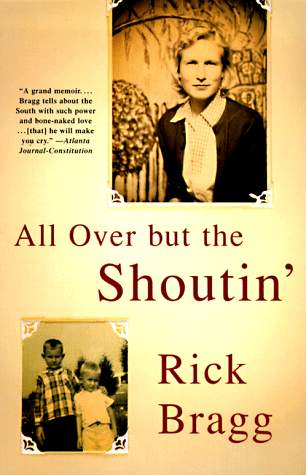
Review: "All Over But the Shoutin" by Rick Bragg

It's been a while since I reviewed a memoir.

There was a time when I was really into this genre and read all the memoirs I could get my hands on. I even wanted to write a memoir myself, but had to put that project on hold because--I don't know if you know this--memoirs are really, really hard! You'd think at first glance that they would be easier to write than fiction because you're drawing from real life events, and the writers who do it well make it look effortless. However, a memoir has a very difficult task to accomplish: take something that is, by definition, complicated and without end (LIFE) (let's pop some bold and underline on that actually) (LIFE) and transform it into a neat, linear story with a beginning, middle and end.

Life is very unsuited to literature. It defies the standard three-act structure, never supplies the satisfying story and character arcs that make for compelling fiction, and has this nasty way of just petering out into the next series of events without giving you any satisfying conclusion. There are no bangs at the end so you know when to clap.
Maybe if they'd shot him out of a cannon at the end?
As proof of my theory, today's author, Rick Bragg, had to win a Pulitzer in journalism before he wrote his memoir, "All Over But the Shoutin." Or maybe that's just a coincidence. Either way, it's quite a good memoir about growing up poor in the rural South.

This describes a lot of offerings in the memoir genre, I know, and Bragg admits at the beginning of his book that his is a very typical story and perhaps of no interest to anyone. He didn't write his memoir to break new ground, but rather because his beloved grandmother died and made him aware of how little time certain members of his family may have left on the earth. He wanted to capture their stories and life experiences before they died, because they'd always been dismissed as unimportant in the eyes of society, but were important to him personally and therefore worthy of memorializing.

I don't think this is best memoir I've ever read, but I found it noteworthy because of how self-effacing Bragg is in describing his life. Memoir writing is inherently a narcissistic endeavor, in that the author assumes that whatever happened in her life is so fascinating that the rest of the world needs to know about it. Frequently the author is correct in that assumption, otherwise why would we read memoirs? But Bragg's memoir is significant because he focuses less on what makes him and his family unique, and more on what makes them the same as all the other people he meets later in life as a journalist, even if those other people are freedom fighters in Haiti or bodega owners in the Bronx.

There's a wonderful universality about Bragg's writing that you don't often encounter in the memoir genre. The book does suffer in  a few places from having a too much emotional distance from its main subject--Rick Bragg--but makes up for it by imbuing even passing characters with liveliness and humanity.

Final Grade: B. Recommended for fans of memoirs, stories about the South, and those interested in journalism.

Saturday, June 1, 2013

Review: "The Tender Bar" by J.R. Moehringer

Holy shit, did I never post this?! I wrote this review weeks ago and it's just been sitting in my drafts box

So this was not a memoir about alcoholism, let me get that out of the way. When a book is about a childhood and early adult hood spent in a bar, you expect it to be about substance abuse (also, the description on the cover said it was the best book of its kind since Mary Karr's "The Liar's Club," which was about alcoholism).

But "The Tender Bar" is actually about masculinity and how a boy learns to be a man. The author, J.R. Moehringer, was raised by a single mother and had to cobble together father figures from the men at his local Manhasset, Long Island bar, Publicans. The various uncles and neighbors and friends who showed him how to be a good man--and in many cases, how not to be a bad man--are vividly portrayed with both humor and pathos. I didn't learn anything about the masculine identity I didn't already know (as a woman, I already know far too much about the male ego, what makes it tick, and what makes it dangerous, as I discussed in my review of "Wide Sargasso Sea"), but it was a nice change of pace from the kinds of books that I usually read, and a reminder that white males who go to Yale are humans, too.

The star of this work isn't the narrator, though, or the men he gathers around himself to emulate. Publicans is the true subject of "The Tender Bar." The book is as much a history of the bar and the honored place it held in the community as it is about J.R. Moehringer, and I really enjoyed that aspect of the story. The bar, as an active character in the book, was the beating heart of Manhasset, a real public house where everyone, men, women, and children, could go and be welcomed with food, drink, and company. Publicans provided a safe place for the author during the rough times in his life, and also provided a compass for the decisions he had to make as he stumbled toward adulthood, and it's heavily implied that he was only one of many who needed the bar in this way.

Continuing my theme of books that didn't go where I thought they would, the fact that this book wasn't about alcoholism says a lot about how I expect drinking narratives to go. I don't know if it's my latent Temperance Society woman coming out (I'm not going to say my latent Puritan, because they drank like fish), but I do feel weirdly guilty that I expected the author to turn into a wretched drunk who had to reject the bar in order to get sober and live a truly meaningful life. The life he led in Publicans was deeply meaningful, and overall the relationship he had with the bar was a healthy one. This is a rare memoir about a drinking life that isn't about substance abuse.

And he ends the book by realizing that all of the things that make a good man were right in front of him the whole time, embodied in his mother, so take that, patriarchy!

Final Grade: B. Recommended for fans of memoirs, stories about boys and their fathers, and the people you meet in bars.


Book Review: "The Rabbi's Cat"

So it turns out that art schools have a pretty good selection of comics and graphic novels in their libraries. Today I'm reviewing "The Rabbi's Cat," an original graphic novel from French writer and artist Joann Sfar.

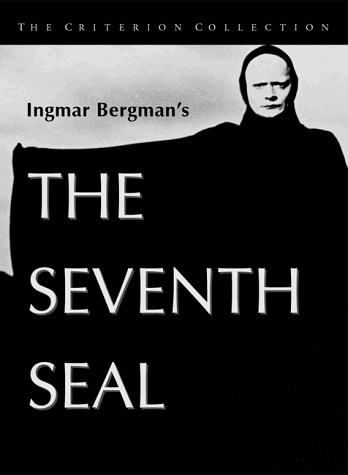
"The Rabbi's Cat" was also made into a well-received animated movie that I haven't had a chance to see yet. Maybe the BF will let me put it on the Netflix queue--and maybe he'll finally return "The Seventh Seal" so we can start getting other DVDs in the mail again.
You have had this since February and haven't watched it. Admit defeat and return it so we can get more cartoons.
The story is told from the point of view of a cat owned by a prominent rabbi in 1920s French-colonized Algeria. Kitty is just an ordinary kitty until he eats the rabbi's parrot, at which point he becomes sentient and gains the ability to talk. To the consternation of his owner, the first thing Kitty says is a lie: "I didn't eat the parrot." So the rabbi tries to turn Kitty into a pious, Jewish kitty by teaching him the Talmud, even though Kitty wants to skip all that and go straight to learning the Kabbalah.

This is a story about the Jewish experience, much like "To the Heart of the Storm" by Will Eisner. "The Rabbi's Cat" isn't actually about the rabbi's cat--it's about the rabbi and the people he has to teach and guide in his community, even when he isn't entirely sure where he's going himself. His world is in a constant state of change: modernization of clothing, morals and attitudes among his congregation; changes in French bureaucracy that could remove him from his post; his daughter is getting married to a Parisian Jew from an entirely secular family; and his cat has learned how to argue scripture with him.

It's tricky to incorporate anthropomorphic animals into a story without it becoming childish or overly precious, and I think Sfar did a great job of making Kitty into a fully realized, adult(ish) character without losing the humor and whimsy that cats bring to the lives of their owners. Furthermore, Sfar seems to have a very specific reason for telling the story through the eyes of the cat instead of via one of the human characters. He uses the the outsider perspective of the animal narrator, who neither understands nor conforms to societal pressures and expectations, to great effect to illuminate the various states of separateness and alienation experienced by Algerian Jews both in their homeland and in the land of their colonial overlords. As a free agent, Kitty can observe and question human behavior in a way that the rabbi, who is bound by all the myriad rules of the Torah, has never done before.

Also--kitties!
Joann Sfar with cat. *squee*

Final grade: B. Recommended for fans of cats and those interested in the Jewish experience and life under French colonial rule.

Saturday, May 11, 2013

No Post--working

This week I read Craig Thompson's "Blankets," and Joann Sfar's "The Rabbi's Cat," but I'm working today and tomorrow so the reviews will have to wait until next week.

Sorry.

Sunday, April 28, 2013

Review: "Gardens in the Dunes" by Leslie Marmon Silko

This is the second book by Leslie Marmon Silko I've reviewed, the first being one of my all-time favorite novels, "Ceremony."

I didn't like "Gardens in the Dunes" as much as I liked "Ceremony." "Ceremony" was more experimental, with a non-linear time structure, and also more ambitious in what it was trying to achieve from a technical perspective, in that the physical text of the novel is gradually revealed to the reader as an integral part of the ceremony described in the story of the novel. It invites the reader's participation in the ceremony via the act of reading, rather than asking the reader to be a passive witness to the events as presented.

"Gardens in the Dunes" is a more conventional novel that lacks the meta-textual complexity of "Ceremony," but is ambitious in other ways and always entertaining. I didn't feel the least bit disappointed with "Gardens," not like when I read Monique Truong's "Bitter in the Mouth," the far-inferior sophomore effort from the author of my other favorite novel, "The Book of Salt."

The story "Gardens" is told from the perspective of multiple characters and incorporates a wide variety of
settings, from the Arizona desert to jungles of Brazil to the citron groves of Corsica. It also addresses themes and events outside of the American Indian experience, which surprised me more than it should have. A lot about this book surprised me in ways that made me newly aware of the limits our society places on American Indians, right down to the narrow and rigid narratives we allow them in mainstream literature. I kept expecting bad things to happen according to my own expectations of American Indian lives, but while some bad things do happen, they never happened in the way I expected, and frequently good things happened instead. Families are re-united instead of being torn apart; children live instead of die; dreams come true instead of dying; land is secured, not stolen.

When the Indian Police take the main character, Indigo, away from her sister and put her in the government school, I expected the rest of the novel to be about how horrible the government schools were to the children stolen from their parents and forced to live there. But Indigo escapes to find her older sister, Salt. And I expected the novel to be about her re-capture and punishment in the school, or maybe about the abuse she suffers as she searches for Salt in the lawless desert. But she's taken in by Hattie, a recently-married white woman living with her husband on his citrus farm in the Californian desert. So I expected Hattie to try and force Indigo to be more like a white child, cutting her off from her heritage, but Hattie actually ends up being a Harvard-educated liberal who is a very supportive surrogate mother to Indigo. They go on a trip to Long Island, England and Italy, and I then expected Hattie to want to keep Indigo away from Salt and adopt her as her own child. But Hattie actually returns Indigo to her family, leaving Indigo better off, with both world experience and a trunk full of exotic plants and seeds that she and her sister then plant at the titular garden in the dunes.

This is just one story-line of many that took me by surprise. "Garden in the Dunes" may not be as technically ambitious as "Ceremony," but it more than makes up for that with the ambition of the story itself. I don't know if it was Marmon Silko's intention to play with the reader's expectations the way she did, or if I'm just a lot less enlightened and knowledgeable about the literary traditions of people of color than I think I am, but this book was an eye-opener for me in any case.

The standard cultural narrative is that the American Indians lost everything, and maybe that's a comfortable narrative for the mainstream audience because it absolves us of responsibility toward the current American Indian population. An extinct plant can never be brought back, so there's no need to waste effort or time trying. But a narrative about American Indians who endured and even thrived is trickier to digest because it demands attention be paid to issues that the mainstream considers settled and done with, which is actually quite disrespectful to the people still confronting these supposedly "settled" issues every day (see my review of "The Round House" by Louise Erdrich).

Final Grade: B+. Recommended for those interested in plants, American Indians, travel stories, stories about sisters, and the American West.

Saturday, April 20, 2013

Review: "Wide Sargasso Sea" by Jean Rhys

I wanted to like "Jane Eyre" so badly.

And I did like her--Jane Eyre the character. Jane wasn't the problem. It was that fucking Lord Rochester. What an asshole. I want to dig up his imaginary corpse and punch him in his dusty, moldering nuts.

Fortunately, there's a version of that story where Rochester isn't portrayed as a smoldering aloof hero--a Batman of the English countryside, if you will--but rather the greedy, insufferable white devil I suspected him to be all along.

Jean Rhys's "Wide Sargasso Sea" is about Rochester's first wife, the madwoman in the attic, Bertha. In "Jane Eyre," Bertha is said to be Creole, a woman of British descent born and raised in the Caribbean colonies. Rhys shifts the timeline of her book to coincide with the emancipation of slaves in Jamaica, and re-imagines "Bertha" as Antoinetta, a daughter of slave owners who lose everything when they were unable to make the shift to a post-slavery world. An unnamed English nobleman, whom we assume is Rochester, marries Antoinetta for her stepfather's money when she's barely seventeen and fresh out of the convent school. While at first they are happy together at a small house in the Jamaican countryside, a man claiming to be Antoinetta's half-brother by her biological father and a former slave contacts the nobleman. The man tells him that Antoinetta's mother went mad, that Antoinetta herself had shown signs of madness as a girl, and that Antoinetta's stepfather and stepbrother swindled in nobleman into marrying an obviously defective piece of merchandise. The nobleman then refuses to touch or speak to his wife, who doesn't understand why he's suddenly treating her so coldly, and then she actually does go mad when the nobleman dismisses all of her servants, takes her to England, and shuts her up in the attic so he won't have to look at her anymore.

I feel like there should be a name for this genre, where non-western or minority writers re-tell a classic Western story from one of the non-western or minority character's point of view. Rhys re-tells "Jane Eyre" from the perspective of the madwoman in the attic; David Henry Hwang re-imagines Puccini's opera "Madama Butterfly" as a spy story with an actual Peking opera star as Butterfly; Alice Randall re-writes "Gone With the Wind" with Mammy's daughter (and Scarlett's half-sister) as the narrator.

These types of stories are fascinating to me because one, there are not enough minority voices in literature, and the further back in history you go, the less there are; and two, it's a valuable exercise to contrast how white writers see and portray minority characters and how those characters see and portray themselves. These works break down white constructs of what it means to be black, or Oriental, or Creole, and re-define them based on how actual black people, Orientals, or Creoles experience race and identity.

By doing this, the writer also breaks down and re-defines the concept of whiteness, which hitherto has been the unexamined default, the norm, defined by what it is not rather than what it is. The apparatus of societal power is exposed  by those crushed underneath it, to those who are its beneficiaries but are barely aware of its existence. James Baldwin in "The Devil Finds Work" talks at length about how white people can never really know black people, but how black people know white people better than white people know themselves because such knowledge is necessary for survival in the white man's world.

Works like "Wide Sargasso Sea" reveal aspects of "Jane Eyre" and the character of Lord Rochester that weren't present in the original novel, in addition to offering a richer and more meaningful back-story for a marginalized character from the original work. The relationship between the colonizer, England/Rochester, and the colonized, Jamaica/Antoinetta, moves to the forefront of the story and illuminates how larger societal ideas about life and civilization affect individuals. "Jane Eyre" presents the events as one unlucky individual with an insane wife without examining the very ideas of sanity and insanity and how they relate to colonialist attitudes about the effects of geography and environment on individuals living away from the civilized motherland.

I could go on in this vein--I haven't even really touched on Rhys's shifting of the timeline of her book to coincide with emancipation and how the black characters in her book deal with freedom and have to re-define their relationships to the whites in Jamaica. But I've already written way more than I planned to about "Wide Sargasso Sea" and I'm afraid that the only people who will find this interesting are other scholars of postcolonialism (which my spell-check doesn't even recognize as a word, so I know I'm drifting pretty far from the mainstream with this review already).

I recommend Jean Rhys's "Wide Sargasso Sea" for fans of classic literature, especially "Jane Eyre"; people who enjoy the hard-to-name genre of non-white authors re-telling white stories from the perspective of non-white characters; and anyone interested in the history of the Caribbean and the Age of Imperialism.

Final Grade: B+.

Wednesday, April 10, 2013

Bonus Review! "WE3" by Grant Morrison and Frank Quietly

Get ready to cry: this is a comic book about a doggy, a kitty and a bunny trying to find their way home.

Writer Grant Morrison and artist Frank Quitely are one of the most popular comics teams working today. Individually, they are masters of their respective forms, but together they're a powerhouse. In the same way that people will line up to see "the new Brad Pitt," comics fans line up to get "the new Morrison and Quitely." Their names alone move the product.

That's just a bit of background for the comics layperson. Actual comics readers may feel like a film buff who just had me explain who Alfred Hitchcock was, but we try to be inclusive on Big Island Rachel's media empire.

Anyway, "WE3" is an original miniseries by Morrison and Quitely about three house pets stolen from their homes who have been fitted with weaponized exoskeletons and given the ability to talk. The military created them to test the possibilities of using animals in war zones instead of humans, and the experiment was successful--so now they're going to kill the animals and move on to the next phase of the experiment with new, more dangerous animals. Our three heroes break out of the laboratory and hit the road, battling their way across town and country to make it home again.

If you aren't already crying, you're dead inside.

Story-wise, the plot is pretty simple and the characters fall in to some basic archetypes. The dog, called 1, is the stalwart leader, the cat, 2, is the ruthless, cynical wildcard; and the rabbit, 3, is plain-spoken and sweet.

I think I just described the make-up of the Powerpuff Girls: head, hands, and heart; brain, brawn, and spirit; Leia, Han, Luke. As I said, this story's been done many times over, but in a case like this, where it's done so well, you can see why the archetype has endured for so long. There's great drama and pathos in the ragtag team of rebels battling the empire while trying to address their internal conflicts; or, if you want to draw from the Eastern tradition, in the master-less ronin wandering the countryside in search of closure and justice.

The fact that "WE3" tells this story with cuddly-wuddly animals instead of humans heightens the emotional impact. Animals are, to draw again from the Eastern tradition, like cherry blossoms: beautiful, but short-lived and transient. (If you're ever watching a Kurasawa film and see cherry blossoms, impress your friends by saying that the blossoms represent mortality and a character is probably about to die.) Animals trip our emotional triggers because their lives are so short and intense compared to our own. Most of us experience the death of a beloved pet long before we ever experience the death of a human close to us, and the knowledge that animals we grow to love aren't long for this world makes them intensely sympathetic characters.

Animals are also very moving because they articulate some of our most basic needs and fears. WE3 have a limited understanding of the human world and are completely outmatched by it, weaponized exoskeletons notwithstanding, and our hearts are moved by their plight because we, too, frequently feel outmatched and confused by the world and just want to get home. It's a primal fear and a primal need, one that taps into the survival instincts we were all born with, so the characters' drive and motivation are instantly understood and embraced.

And then we all cry and cry and cry. Hopefully not on the subway, like I did. This is not a good book to read in public.

God. Damnit.

Final Grade: B+. Required reading for comics fans. Recommended for people who like animal stories, war stories, science fiction, and sadness.