Thursday, December 27, 2012

Review: "Sweet Tooth" by Ian McEwan

Wow, another 2012 book, and a popular one at that! I'd almost call my media empire mainstream if I didn't just publish a 2000-word rant on what I thought was wrong with movie "The Hobbit: An Unexpected Journey" over on my personal blog.

Ian McEwan's "Sweet Tooth" is about spies. Specifically Serene Frome (rhymes with "plum"), a young up-and-coming agent in Britain's MI5 of James Bond fame. Serena rescued from her dull routine of paper-pushing and endless filing when an old crush within the agency approaches with project Sweet Tooth, which seeks to secretly fund writers with a distinctly pro-capitalist and pro-Britain sensibility. The hope is that these writers will produce popular and well-regarded works that will sway public opinion away from communism and toward the status quo. Basically, Serena's superiors hope that her target will be the new George Orwell and write another "1984."

Of course, she sleeps with her target the second time they meet and begins a long affair with him; and of course, he doesn't end up writing "1984" at all, but a popular and well-regarded anti-capitalist dystopia. Oh dear, what will become of Serena and Sweet Tooth now?

There's a twist at the end of this novel that I'm not going to give away here. But if, like me, you're slightly bothered by Serena's narrative and think her a bit of a twit or lacking in some ill-defined way, you're in for quite a surprise.

I breezed through this one in a couple of days. It's a fine novel, the twist is a memorable one, and I was interested to learn about Britain in the late sixties and early seventies, especially in regard to the way it's government handled various energy and political crises both at home and abroad. I suspect that readers who are interested in the politics of the Cold War, or politics in general, will notice and appreciate many things that went over my head. But it's not a book I need to own or read again.

Final grade: B. Recommended for Anglophiles, those interested in the Cold War, and fans of all things spy-related.

Sunday, December 16, 2012

Review: "This Is How You Lose Her" by Junot Diaz

Another late review of another very recent book, Junot Diaz's "This Is How You Lose Her" (2012). At this rate I'm going to be putting together a Best Books of 2012 list! (I'm not actually going to make that. I read books to escape from the endless chasing of trends and fads, not to wallow in it. Books enable us to slow down and ponder; trying to read everything in the zeitgeist defeats the purpose, in my opinion.)

Diaz won the Pulitzer back in 2007 for "The Brief Wondrous Life of Oscar Wao," which I also read and thoroughly enjoyed. I learned a great deal about the history of the Dominican Republic, specifically about the reign of the dictator Rafael Trujillo, who ruled the island nation with blood and terror from 1930 to 1961. And I especially liked "Oscar Wao" because Diaz relied heavily on fantasy and science fiction analogies to explain the complex politics and history of Trujillo's Santo Domingo.

"Lose Her" is a much more intimate novel. Written as a series of interconnected short stories, the book centers around the narrator Yunior, who can't stop screwing around on his girlfriend Magda. She leaves him and he just can't seem to get over it, even though he was the one who kept a truly shocking number of sucias on the side.

"Sucia" and the masculine "sucio," as near as I can tell, means "slut." With Google Translate, it would be extremely easy for me to look up the exact meanings behind all of the Spanish words and phrases scattered throughout Diaz's prose--in fact, others who've read Diaz tell me they get frustrated because they keep stopping to look up definitions--but I don't bother. One, because context usually provides clues to meaning, and two, because I know the teensiest bit of Spanish and can figure most phrases out if I give it a moment's thought. I don't often try, though. Diaz hits that sweet spot of just enough Spanish words, but not too many of them, making prose that is both readable and slightly mysterious. We can peek through the windows into these characters' world, but can't just walk in through the front door whenever we please.

Another thing I like about the Spanish-English prose is that it really gives the impression of Diaz writing for an audience of Dominican Americans. I'm always slightly bothered by authors who go to foreign countries and write about the people in those countries, because those authors aren't writing for those people; they're writing for other (white) people at home to better understand the "foreigners." That's why Isabella Bird's "The Hawaiian Archipelago" didn't get an A on my rating system and why Leslie Marmon Silko's "Ceremony" did.

Ah, hell, I didn't review "The Hawaiian Archipelago" yet? I so clearly remember building that post in my mind. Is it possible I just thought about it so hard that I completely forgot to actually write it? This is my real problem with having a book blog: I read too much. Every time Saturday rolls around, I've got about three books I've finished that week that I can review, so I pick one and tell myself I'll review the others the next time around--by which time I've finished three more books! I'm going to have to write more reviews. Or read less books, I guess.

Where was I? Right, Junot Diaz's "This Is How You Lose Her" reads like a book written by and for an audience of Dominican Americans, and I very much enjoy that kind of writing. There's a whole sub-genre of Pidgin literature in Hawaii that seeks to legitimize the language and culture of local residents descended from the East Asian and Pacific Rim immigrants of the late nineteenth and early twentieth centuries. I took a class on Pidgin Lit in college and learned a lot about how language shapes cultural and individual identity.

For example, if Diaz had used the English word "slut" instead of "sucio" or "sucia," the true meaning of the term would have been lost. "Slut" has all sorts of cultural and moral baggage attached to it, but it's the baggage of the English-speaking society from which it originates. "Sucio" has an entirely different meaning and significance for the Spanish-speaking society that uses it. Swapping "sucio" for "slut" doesn't work because each society has different attitudes toward sex and morality. For one thing, "slut" applies only to women and has no male equivalent, whereas "sucio/sucia" is both masculine and feminine depending on the suffix and can apply to either gender. That right there says a lot about the different ways sexuality is expressed and viewed in the English- and Spanish-speaking cultures that Diaz explores in his work.

This brings us back to the plot of the book. Yunior is muy sucio, as was his father, his brother, and all of his friends. They all have clandestine sex and sometimes even children outside of their primary relationships, and they measure the strength of their masculinity by the number of women they fuck. How the women feel about this behavior doesn't matter to them, because they figure they can always find another woman if one leaves them in disgust. Yunior finds the flaw in this logic when the woman who leaves him is the one woman he desperately wants to keep, and no girlfriend he finds afterwards can replace her.

I see some similarities between Yunior and Madame Bovary, who also slept around on her partner out of ill-defined boredom and a desire to make her life fit the pattern of some archetypal romantic heroine. However, Madame Bovary models her sexual life on the trashy romance novels she reads. Yunior models his behavior on his real-life family and peers, which makes his situation almost more hopeless than hers because he has the tacit encouragement and approval of everyone around him to keep acting like a cheating piece of shit, even when it costs him everything. 

"This Is How You Lose Her" isn't a very happy book, but it is a realistic one that thoroughly explores the damaged psyche of a man who lost a good woman because of his society's poisonous attitudes toward sex and relationships. We can file this one away under the "sexism hurts men, too" umbrella. Patriarchy--it's a bitch.

Final Grade: B. Recommended for those who like a tragic love story, seeing a cheater get what's coming to him, or exploring the dark side of sexism from the perspective of someone who benefits from it.

Saturday, December 8, 2012

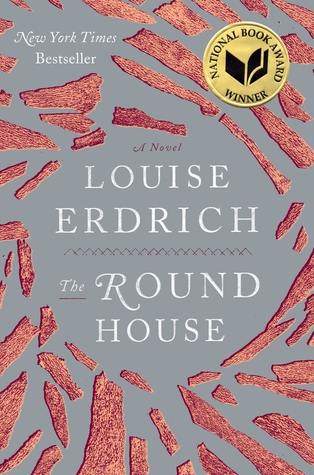
Review: "The Round House" by Louise Erdrich

It's not often I'm so timely with my book reviews. Louise Erdich's "The Round House" was this 2012's National Book Award winner for fiction, which for me is basically a breaking story. Normally I read books I find on doorsteps, so they're old and possibly swarming with parasites, but my feminist websites have been all abuzz about "The Round House" because it's the first book by a Native American woman to win the prize, and I needed to see what the fuss was about. I had to wait in the hold queue for several weeks to get my library's copy, so all of the professional reviewers have already taken a crack at this book, but let's dive in anyway. We all know that my crack is the best.

I'm going to show up in some disturbing Google searches for that sentence.

This is the third book of Erdrich's that I've read, after "The Master Butchers Singing Club" and "Love Medicine." I own a copy of "Love Medicine," which was pretty good and I may review it someday. But I have to confess that even though I tried a couple of times, I couldn't get through "The Master Butchers Singing Club." Both books are these sweeping family sagas that play out over several generations. "The Round House" is not, and I think it's a better book than the other two because of it. The family sagas have sprawling casts of characters and various historical events to get through, so everything is more general and broadly drawn. We don't get a really in depth picture of one character or situation because there are so many. But with a book like "The Round House," Erdrich zeroes in on one person, at one point in time, dealing with one event, and this gives the story room to breathe and really explore its various dimensions.

"The Round House" takes place over a single summer in 1988 on a North Dakota Ojibwe reservation, where the narrator Joe has just turned thirteen. The book opens with the brutal attack and rape of his mother, and the rest of the story is about the fallout of this attack, both within Joe's immediate family and within their community. Joe's father is a judge on the reservation, so we get a close, inside look at the legal challenges faced by Native American tribes when they go looking for justice within a justice system that has not, historically, protected their interests or rights. Joe's mother knows and can identify the culprit, but the man attacked her on an intersection between reservation, state, and federal land, which are all represented by different courts. It's impossible for anyone to determine what legal entity has jurisdiction over the crime, so the man gets away free. 

Or does he?

"The Round House" is an interesting mix of a legal thriller and a coming-of-age story. Joe is full of energy and zest for life; he runs around, makes mischief, ogles women and sneaks booze and drugs with his friends, because he's thirteen and his life is just beginning. But he's also the recipient of several hundred years of very sad and bloody history that comes crashing into his own house and family when his mother is attacked. He struggles to integrate his natural teenage selfishness and irresponsibility with this huge burden of justice that has suddenly descended on his shoulders. There's a lot of humor in his journey, but also a lot of sadness as he trades his innocence for a lifelong sense of terrible purpose, and realizes that things will never return to their former shapes.

Final Grade for "The Round House": B+/A-. Once you start, you can't put it down, but the subject matter is harsh and I'm not sure I want to re-read it anytime soon. Not recommended for the faint of heart. Recommended for those who like coming-of-age stories, legal thrillers, and books about the contemporary Native American experience.

Sunday, December 2, 2012

Review: "Slaughterhouse-five" by Kurt Vonnegut

I could have sworn it was "Slaughterhouse-5," with a digit, but the Internet informs me that it's "Slaughterhouse-five," with the word.

So memory is a funny thing, as we see in Kurt Vonnegut's semi-autobiographical anti-war novel. Vonnegut, if you don't know, was a prisoner of war in Dresden, Germany in the waning days of World War II. He survived the Allied firebombing of that city and swore that he would one day write his "famous Dresden book" about the attack, which he considered the most important thing that had ever happened to him, after being born, getting married and having children.

Ordinarily, this is the sort of book that I would review during Banned Books Week, since it was one of the most frequently challenged books of the 1990s. But Delacorte Press recently published a volume of Vonnegut's letters and essays, edited by Dan Wakefield, and selections from the book have been making the rounds on the Internet, putting me in the mood for Vonnegut's wit and humanity. If you've never read any Vonnegut, "Slaughterhouse-five" (or "Cat's Cradle" if you prefer more traditional storytelling) is a good place to start. It combines Vonnegut's trademark deadpan humor with the surprisingly tender grasp of human frailty that made him one of America's greatest writers.

The firebombing of Dresden is the moral centerpiece of 1969's "Slaughterhouse-Five; or, The Children’s Crusade: A Duty-Dance with Death." The book, arguable Vonnegut's most famous and influential work, was nominated for a National Book Award, though as you can read for yourself in this 1969 New York Times book review, it's always struggled to claw its way out of the science fiction ghetto into its very deserved place in the ranks of serious literary satire.

The protagonist, Billy Pilgrim, is "unstuck in time." He never knows what part of his life he is going to experience next, and he lives in a perpetual state of anxiety, never knowing if he is going to walk through a door into the firebombing of Dresden or wake up naked in a zoo on the alien planet Tralfalmadore, where he is the main exhibit. The non-linear style of writing is one of the greatest strengths of the book, because we get to see scenes of absolute lunacy and utter weirdness juxtaposed with horrific scenes of war and human suffering. You've never realized how stupid and senseless war is until it's all jumbled up with flying saucers and aliens shaped like toilet plungers.

Vonnegut had a rare talent for taking huge, almost unfathomable ideas and breaking them down to the hard and simple nuggets of truth at their core. I think one of the comforting things about war is that it's so big and confusing that we can sometimes hide from its reality by convincing ourselves it's much for our puny human brains to comprehend. "Slaughterhouse-five" strips away all of that comforting confusion and forces us to understand and grapple with the worst aspects of humanity. There is nowhere to hide from this blazing torch of a novel.

Final grade is A. Recommended for first-time Vonnegut readers, and fans of satire, science fiction, politics, and peace. Not recommended for people who can't stand gore and bodily functions. There's no shame in that, I'm just warning you that there's a lot of diarrhea in this book.

Monday, November 26, 2012

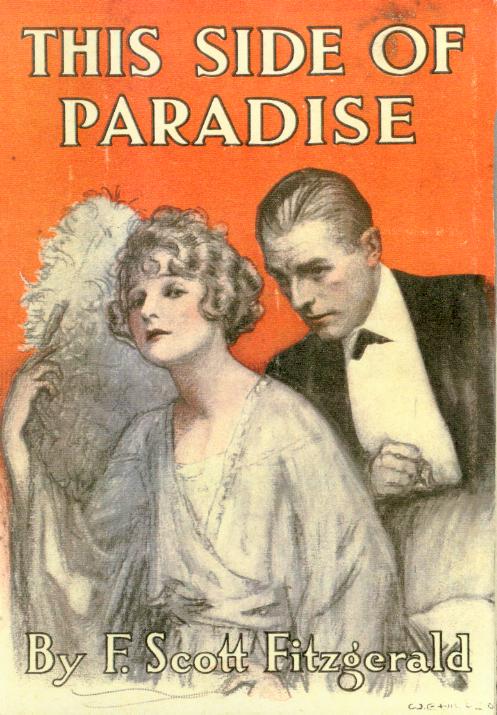
Review: "This Side of Paradise" by F. Scott Fitzgerald

Oh, boy, did I get in trouble with this one.

I was hanging out at the BF's apartment all this long weekend, and since he's deep in grad school hell, we spent most of the weekend with our books in our respective corners, ignoring each other. I read "The Book of Salt," "Slaughterhouse-Five," half of "The Hobbit," and today's book,  "This Side of Paradise" by F. Scott Fitzgerald (1920).

I blazed through it in a day and a half, tossed it to the side, and announced, "That was a stupid ending. All that happened was--" Except I didn't end my statement with two hyphens. I kept going. And the BF was pissed.

"I wanted to read that," he said quietly, turning away from me like an angry cat. "I haven't read it yet and I didn't want to know what happened."

Cardinal rule of responsible reading: don't give away the damn ending.

It was his book, too. I read his book and spoiled the ending for him. That's like showing up at someone's house, eating all their food, wiping your mouth on the cat, and bailing without even helping do the dishes. Or wash the cat.

How was the book itself? Prrreeettttyyy good, but not great. I can't deny that Fitzgerald has talent, and the fact that he wrote "This Side of Paradise" when he was but a tender lad of twenty-three is astounding. The book is about a young man named Amory Blaine, and tells of his birth and upbringing, his prep school days, his college days, and the few years follow college. We learn about his friends and lovers, the books he reads, and his search for himself.

Fitzgerald drew me into this story like Edith Wharton does. They both write so piercingly about the American upper-class, explaining hugely complex, labyrinthine social structures and morays with brevity and humor. I was fascinated by Fitzgerald's description of Princeton College life in the 1910s: the mad scramble for popularity and the inner social circle; the complete lack of regard for actual scholarship (boys who studied too hard were "grinds" and never popular or important); and the way these uber-privileged white men exercise their privilege and get ready to rule the country. There's also this really weird bit in the middle where Amory meets the devil--like, the actual Devil, Lord of Hell, First Among the Fallen, etc.--and then it's never mentioned again. Ever. You have to admire that kind of audacity.

However, you can tell that this book was written by a twenty-three-year-old. It's padded, pretentious, and attaches far too much importance to the types of feelings and events that for children are all-encompassing and catastophic, but for adults are merely the vagaries and bullshittiness of life that you learn to shrug off as you get older. I think there's a lot of value in an actual twenty-three-year-old writing about the emotional life of twenty-three-year-olds, because at least he's being honest, and this book is nothing but painfully honest. But Jesus, kid, so some girl dumped you for a richer man, you'll get over it (and hi, obvious inspiration for "The Great Gatsby," didn't expect to see you here!).

Also, there's a lot of bad teenage poetry in this book. Painfully bad teenage poetry, with rhymes and everything. I skipped over most of it, because the poetry doesn't advance the plot at all and is written in this leftover Victorian style that clearly hasn't felt the influence of Modernism yet. This makes it tonally at odds with the rest of the rather Modernist novel, in addition to being boring and irrelevant to the story.

Also also, casual racism, sprinkled here and there throughout, and on Big Island Rachel's Books, racism knocks you down at least one letter grade.

"This Side of Paradise" by F. Scott Fitzgerald: C.

Recommended for fans of the writer who are devouring his repertoire. All others should just re-read "The Great Gatsby."


Sunday, November 18, 2012

Review: "Rebecca" by Daphne du Maurier

Now we're cooking with gas.

"Rebecca" was published in 1938 to great critical and popular acclaim and it's considered a modern classic according to the tattered cover of the copy I found on someone's door stoop here in Brooklyn. That's right, this is a stoop find, and wow is it a good one! I didn't realize that it was written so recently. I only know it from clips of the Alfred Hitchcock movie (1940), and that footage led me to believe that "Rebecca" was a Gothic romance from the time of "Wuthering Heights."

The book is definitely a Gothic romance in plot and tone, but it's set in England in the 1930s, so while much of the setting is relatively modern--car travel and telephones are heavily featured--the characters themselves and their attitudes toward each other are holdovers from the Victorian era. There's a lot of interesting juxtaposition between the modern and the ancient in "Rebecca," embodied most strongly in the two mistresses of Manderley.

Rebecca de Winter was the first wife of Maxim de Winter, master of the famous estate and mansion Manderley. I think Maxim must be titled in some way because of the paternalistic way he talks about the people of the nearby town and countryside, and the way those peripheral characters talk about him, but you never learn what his exact title is. Rebecca herself probably has a title, too, because much is made of her good breeding and upbringing. Suffice to say that both Maxim and Rebecca are of the same landed gentry class.

The second Mrs. de Winter (and the narrator), whose first name we never learn, isn't landed gentry. At the beginning of the book, she's actually more of a maid, running errands for an obnoxious American in Monte Carlo. She meets and falls in love with Maxim there. Even though she's only known him for two weeks, and she's twenty years younger than him, AND they're at opposite ends of the social spectrum, she says yes to his marriage proposal and they bum around Italy for a while. Like ya do.

At this point, Rebecca has been dead for almost a year from a well-publicized boating accident, and the narrator is more than a little nervous about stepping into her role as mistress of the fabulous Manderley. Mrs. de Winter doesn't know how to command a staff of servants and she has no experience in socializing with people in the upper class, so she's already at a disadvantage. To make matters worse, Rebecca was apparently a joy and a pleasure to all who came across her, and everywhere she turns, the shy and diffident Mrs. de Winter finds herself compared to the glamorous Rebecca and coming up short. There are even some individuals lurking in the sidelines who miss Rebecca so terribly that they're actively plotting against Mrs. de Winter and her fledgling marriage to Maxim.

"Rebecca" isn't a ghost story in the traditional sense because there are no specters or ghouls, no doors blowing shut mysteriously or cold drafts from unexplained sources. Rebecca herself is most assuredly dead throughout the entire book. But she was such a mighty presence in life that Mrs. de Winter and Maxim feel haunted by her, by the memories that their servants and friends have of her, and by the house and grounds she decorated and designed. In a way, "Rebecca" is a more effective ghost story than one with an actual ghost in it because it is so realistic. It illustrates on how people live on after they die, in their physical possessions and in  hearts and minds of their social circle, and how difficult it is to bury the past when evidence of it is all around you.

But "Rebecca" is also a bit of a murder mystery, right down to the scene at the end where the detective gathers the players together in the library to go over the evidence and decide whodunit. But du Maurier turns this convention on its head as well, because we already know whodunit and why, and all of the characters do, too. It's a suspenseful scene where everyone is just waiting to see if the evidence will add up to the horrid truth or reinforce the comfortable lie.

"Rebecca" is a murder mystery without any mystery, and a ghost story without any ghost. It's a meditation on the encroachment of the modern world into the traditional one, and also questions just how wonderful "tradition" actually is. Does good breeding and a sparkling wit mean that one is a good person? Can someone still be good if they perform terrible deeds? What is the price of good appearances and a stiff upper lip?

"Rebecca" by Daphne du Maurier: A.

Recommended for anyone who likes a good ghost story, a Gothic romance, or the movie "Gosford Park." The movie isn't considered one of Hitchcock's best, though, so I'd avoid it unless you're really into Hitchcock.

Saturday, November 10, 2012

Review: "The Woman Reader" by Belinda Jack

In an unprecedented turn of events, it took me three weeks to finish this book. I'm a fast reader who likes to brag about reading at least two books a week, and I was humbled by Belinda Jack's "The Woman Reader." I don't know if it's because the book was non-fiction, dry, written at a graduate-school level, or some combination of the three, but it did not go down easy.

I would have given up on it all together if it wasn't for the subject matter.  I've been going around to my friends describing it as a history of women and literacy, but that's not entirely accurate. It's not about women writers, though they appear throughout the book; and it's not about rates of female literacy in various societies, though those statistics pop up. "The Woman Reader" is, quite literally, about women reading: what they read, how they read, and many extensive analyses of the moral panics and societal attitudes that surround the issue of women reading, from the nascent days of written language to the birth of electronic publishing.

This is the most difficult book I've read since college. If you had to look up the word "nascent," you might have the same complaints I have. It's full of history, dates, big words, and bigger ideas, and it's written in a very dry and straightforward style that doesn't flow that well to a reader like me, who rarely reads non-fiction and hasn't encountered academic writing in several years.

So why did I torture myself for three weeks slogging through this beast? Because "The Woman Reader" is an enormously rewarding and satisfying book, and not just because you get to remember all your SAT words. In a sea of pop-psychology and pseudo-sociology books  that purport to explain complex phenomena in a breezy finished-in-one-plane-ride format (looking at you, Caitlin Moran's "How to be a woman"), "The Woman Reader" tackles a huge subject with the gravity and depth it deserves and never wavers from its assumption of the reader's intelligence. This book knew just where to stroke me. I do so love to be recognized for my intellect.

The book follows a basic format: during this time period, in this society, we know that women were reading this or that, based on this documentation, and we know that the society reacted to their reading in this manner, based on this other documentation. Short answer: women read, and it bothers folks. Throughout Western history, a cloud of anxiety has surrounded the woman reader because her reading promotes an inner life and an inner reality that society can't touch or regulate. Therefore, society tries to restrict her reading to "appropriate" subject matter that reinforces the status quo.

And I hope you like British history, because that's what you're getting! Belinda Jack starts off in Mesopotamia, which is fine because it's the birthplace of writing, and then she touches briefly on the happenings before the rise of the Roman empire, which is also fine because not a lot of people were literate before then. But after that, she focuses almost exclusively on readers in Christian Europe, mentioning the literary accomplishments of the Muslim world only tangentially, and the literary traditions of Judaism and the Far East not at all. After the chapter on reading done in monasteries and nunneries in Europe, she focuses in even tighter on reading in England and stays there until the end of the book.

The Anglo-centric approach of "The Woman Reader" was often infuriating, especially when Jack rushes through Japanese or Chinese literature in a single page and devotes entire chapters to the differences between what British women were reading in the 1500s and what they were reading in the 1700s. I understand that Jack, being a British woman, has greater access to historical documents from her own country and a greater understanding of her own culture. But Japan produced the world's first novel, "The Tale of Genji" by Lady Murasaki Shikibu. There isn't exactly a dearth of analytical material on "The Tale of Genji" or the society and woman that produced it.

A more glaring oversight was Jack's lack of analysis of "The Peony Pavilion," a Chinese play written by Tang Xianzu. "The Peony Pavilion" is right in that sweet spot of women and reading that this book is about: controversial and censored since it's first performance in 1598, it's ignited societal fears about women's rebellion against authority for hundreds of years. And again, there's no lack of material about the play and it's history. 

Why the exclusion? Did "The Peony Pavilion" and "The Tale of Genji" represent too much of a departure from the neat linear history Jack was presenting with her focus on Britain? Did she feel she couldn't include an analysis of these works without an extensive exploration of the societies that produced them? Does she have later volumes of "The Woman Reader" planned that focus on non-Western women's reading? 

I guess what bothers me most about her Anglo-centrism is the same thing that bother me about "The Happiness Project": it's the implied universality of the subject matter. A book called "The Woman Reader" that ignores non-Western or even non-British women readers for a good chunk of its running time is basically saying that the normal woman reader is a Western Christian woman. I'm not going to lie: "The Woman Reader" is a bit racist.

As a reader more aware, if not more familiar, with non-Western traditions of literature in reading, this distracted me from my overall reading experience. Jack was giving me a lot of information, but she was also leaving a lot out. I hope she will do follow-up volumes to this one, because the subject matter is near and dear to me. I'm a reader. In terms of the way I see myself, the list goes 1) human being, 2) female, and 3) reader. I spend more time reading and more time thinking about the things I read than anything else. If I wasn't allowed to read--if I lived in a society that took my books away from me and limited my access to reading material--I sincerely believe I'd go insane. "The Woman Reader" is the first book I've ever read that put my experiences as a reader in a historical context, so I don't want to be too down on what she accomplished, which is a considerable feat of scholarly criticism and analysis.

Still--kinda racist. So final grade: C+.